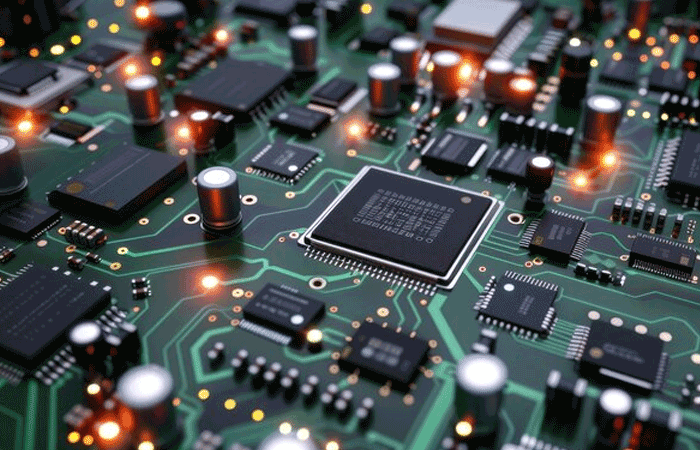
The semiconductor industry in India is on the cusp of a transformative era, driven by strategic investments and government initiatives aimed at fostering a robust domestic ecosystem. The inauguration of major semiconductor manufacturing facilities, such as Tata-Powerchip Semiconductor Manufacturing Corp’s chip fabrication unit in Gujarat and the CG Power-Renesas OSAT facility, marks a significant milestone in this journey. With approximately US$ 15 billion invested in these projects and a goal to position India among the top five semiconductor manufacturers globally by 2029, the impact on the manufacturing industry is poised to be overwhelmingly positive. This article explores the myriad ways in which the burgeoning semiconductor sector will bolster technological innovation, economic growth, and global competitiveness in India’s manufacturing landscape.
India’s dependency on imported semiconductors has been a concerning factor for its manufacturing industry, prompting the Indian Government to focus on establishing a robust domestic semiconductor manufacturing ecosystem. In March 2024, Prime Minister Narendra Modi inaugurated several key semiconductor facilities, including Tata-Powerchip Semiconductor Manufacturing Corp’s chip fabrication unit in Dholera, Gujarat, the CG Power-Renesas outsourced assembly and test (OSAT) facility in Sanand, Gujarat, and the Tata OSAT unit in Morigaon, Assam. Approximately US$ 15 billion has been invested in these projects, with proposed investments of US$ 10.9 billion for the Tata-PSMC chip foundry, US$ 3.2 billion for the Tata OSAT facility, and US$ 0.9 billion for the CG Power-Renesas. Union Electronics and IT Minister Ashwini Vaishnaw anticipates that by the end of 2029, India will be among the top five semiconductor manufacturers globally.
India’s Semiconductor Boom: Key Drivers Fueling Market Growth
According to a study by IMARC Services Private Limited, the Indian semiconductor market is projected to reach US$ 7.8 billion by 2032, exhibiting a compound annual growth rate (CAGR) of 5.5% from 2024 to 2032. The demand for semiconductors has increased over time, driven by favorable policies and initiatives by the Government. Several key factors are contributing to this market growth.
Growing Demand for Electronic Devices
The demand for electronic devices in India is on the rise. According to a report by Equiris Securities, the country’s electronic manufacturing market is projected to reach US$ 71.7 billion, growing at an annual rate of 41% until 2026. Government support and initiatives are fueling this growth. Various electronic devices, including smartphones, laptops, wearables, and more, require semiconductors for connectivity and data processing. This rising demand for electronic devices is expected to propel the Indian semiconductor market significantly in the future.
Favorable Government Initiatives
The Indian Government is introducing various policies and initiatives to promote the semiconductor industry, including incentives for manufacturing, research and development, and infrastructure development. The inauguration of three semiconductor manufacturing plants in 2024 highlights the Government’s commitment to fostering this sector. The Union Cabinet’s approval of the comprehensive Semicon India program in 2021, with an allocation of US$ 9.11 billion, aims to create a sustainable semiconductor and display ecosystem in the country. This support is crucial for the industry’s growth and competitiveness.
Adoption of Electric Vehicles
Semiconductors play a crucial role in electric vehicles (EVs) for navigation, infotainment, power management, and safety systems. The development of autonomous and connected vehicles in India is increasing the demand for semiconductors for sensors, communication, data processing, and AI capabilities. As the popularity of electric and autonomous vehicles continues to rise, the semiconductor market in India is poised for substantial growth.
Emergence of Innovative Technologies
The rise of innovative technologies like 5G, the Internet of Things (IoT), and artificial intelligence (AI) has created significant opportunities for semiconductor companies. These technologies require advanced chips and components to meet evolving needs. The increasing demand for these technologies across industries such as healthcare, telecommunications, automotive, and industrial automation is anticipated to propel the semiconductor market in the coming years.
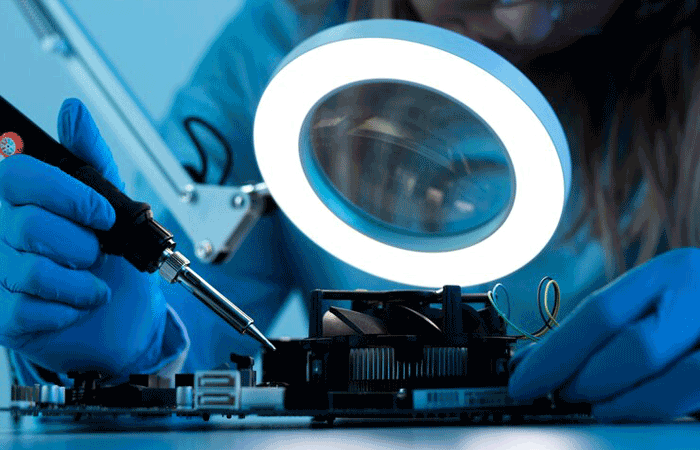
Key Initiatives of the Indian Government for the Semiconductor Industry
Under the India Semiconductor Mission (ISM), the Government of India is prioritizing the development of the semiconductor industry. Launched in 2021, the Semicon India Mission allocated US$ 9.11 billion to establish a semiconductor and display manufacturing ecosystem nationwide. This initiative includes four key schemes:
- Setting Up of Semiconductor Fabs: This scheme offers financial assistance to eligible applicants for establishing semiconductor fabrication plants. Its goal is to attract substantial investments to build semiconductor wafer fabrication facilities in the country. Financial support of up to 50% is approved for setting up manufacturing units for chips below 28 nm. Additionally, the Government provides financial aid of up to 40% for the production of chips in the 28 nm to 45 nm range and up to 30% for setting up facilities for wafers in the 45 nm to 65 nm range.
- Setting Up of Display Fabs: This scheme offers financial support to eligible applicants for establishing display fabs, aiming to attract substantial investments in the country’s TFT LCD and AMOLED display fabrication facilities. The scheme provides fiscal assistance of up to 50% of the project cost, with a maximum limit of INR 12,000 crores per fab.
- Compound Semiconductors/Silicon Photonics/Sensors (including MEMS) Fabs/Discrete Semiconductor Fabs and Semiconductor ATMP/OSAT Units: This scheme offers eligible applicants fiscal support covering 30% of the capital expenditure for establishing compound semiconductors, silicon photonics (SiPh), sensor fabs (including MEMS), and semiconductor ATMP/OSAT facilities in India.
- Design Linked Incentive (DLI) Scheme: This scheme provides financial incentives and design infrastructure support across multiple stages of development and deployment in semiconductor design, including integrated circuits (ICs), chipsets, systems on chips (SoCs), systems, IP cores, and other semiconductor-linked designs. The program offers a “Product Design Linked Incentive” of up to 50% of eligible expenses, with a maximum of ₹15 crores per application, as well as a “Deployment Linked Incentive” of 6% to 4% of net sales turnover over five years, capped at ₹30 crores per application.
Impact on the Manufacturing Industry
The establishment of a domestic semiconductor manufacturing ecosystem will have profound effects on India’s manufacturing industry. Here are some key impacts:
Reducing Dependency on Imports
The current dependency on imported semiconductors poses risks such as supply chain disruptions and increased production costs. By developing a domestic semiconductor manufacturing capability, India can reduce its reliance on imports, ensuring a more stable and secure supply of critical components. This will enhance the resilience of the manufacturing industry, enabling it to better withstand global supply chain shocks.
Enhancing Technological Capabilities
The local production of semiconductors will boost India’s technological capabilities, fostering innovation and enabling the development of advanced manufacturing processes. This will not only benefit the electronics sector but also have a ripple effect on other industries that rely on semiconductors, such as automotive, healthcare, and telecommunications. The availability of high-quality, locally produced semiconductors will facilitate the adoption of cutting-edge technologies and drive overall industrial growth.
Creating Employment Opportunities
The semiconductor manufacturing industry requires a skilled workforce, including engineers, technicians, and researchers. The establishment of semiconductor fabs and related facilities will create numerous job opportunities, contributing to economic development and reducing unemployment. Additionally, the growth of the semiconductor industry will stimulate demand for ancillary services and industries, further boosting job creation.
Attracting Foreign Investment
India’s efforts to build a robust semiconductor manufacturing ecosystem are likely to attract significant foreign direct investment (FDI). Global semiconductor companies may establish operations in India to take advantage of the favorable business environment and government incentives. This influx of investment will further enhance the country’s manufacturing capabilities, foster technology transfer, and promote economic growth.
Promoting Export Competitiveness
With a strong domestic semiconductor manufacturing base, India can enhance its export competitiveness in the global electronics market. Locally produced semiconductors will reduce production costs and improve the quality of electronic products, making them more attractive to international buyers. This will boost India’s exports, contributing to a positive trade balance and strengthening the country’s economic position on the global stage.
India’s focus on developing a domestic semiconductor manufacturing ecosystem is set to transform the manufacturing industry. The significant investments in semiconductor fabs and related facilities will reduce dependency on imports, enhance technological capabilities, create employment opportunities, attract foreign investment, and promote export competitiveness. As India aims to become one of the top five semiconductor manufacturers globally by 2029, the manufacturing industry stands to benefit immensely from this strategic initiative. The growth of the semiconductor sector will drive innovation, foster economic development, and position India as a key player in the global technology landscape.