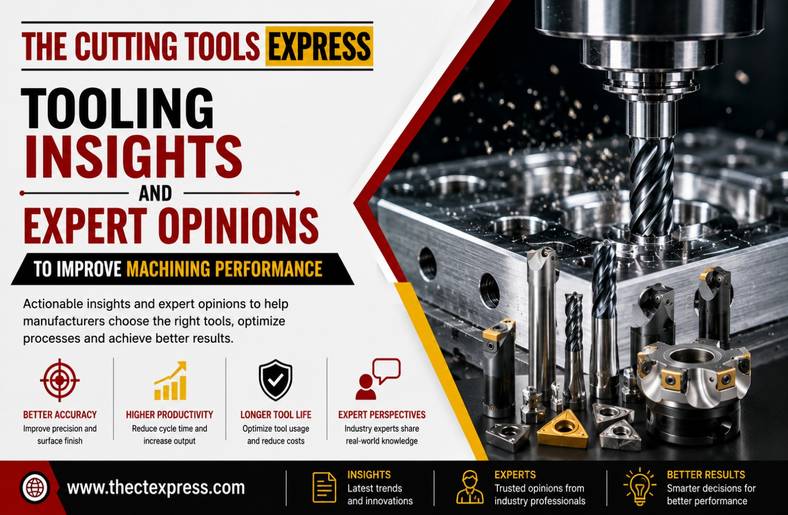
The right cutting tool can have a big impact on a machining job. On the other hand, if you choose the wrong tool, it may cause poor surface finishes, more tool changes, and wasted time.
That is why Tooling Insights and Expert Opinions matter in modern machining. Manufacturers need to keep up with new cutting tools, machining practices, coatings, and recommendations from people who understand the work.
The Cutting Tools Express shares practical information to help businesses make better tooling decisions.
In this article, we’ll look at how cutting tool selection, tool knowledge, and expert advice can improve machining performance, and help you get more from your tools.
What Are Tooling Insights and Expert Opinions?
Tooling insights are simply useful information about cutting tools and how they perform in real machining work. This can include advice on cutting tool selection, tool materials, coatings, speeds and feeds, tool life, machining performance, and newer tooling technologies.
Expert opinions add more practical value to this technical information. A specification may tell you what a tool is designed to do, while someone with hands-on machining experience can explain when that tool is likely to work well and what conditions may affect its performance.
A tool may look suitable on paper but perform poorly under actual cutting conditions. Practical experience helps manufacturers look at the complete job before settling on a particular tool.
Why Expert Tooling Knowledge Matters in Machining
Improve Tool Selection
Each machining job has different requirements. A tool that works well for aluminium may not perform the same way on hardened steel. The right tool can also vary for roughing, finishing, drilling, or high-speed machining.
Expert advice can make tool selection easier. It helps manufacturers choose the right tool material, geometry, and coating based on the actual job.
Improve Machining Performance
The cutting tool has a direct effect on how a machining operation runs. A suitable tool can help produce a cleaner surface, maintain dimensions, and keep cutting stable.
The wrong choice can have the opposite effect. Chatter, poor finish, excess heat, and uneven tool wear can all appear when the tool does not suit the job. Good tooling knowledge helps manufacturers look for the right combination of tool and cutting conditions.
Control Tooling Costs
A low-cost tool that wears quickly may require frequent changes and create more downtime.
That’s why having a tool with better life and consistent performance is important because it can reduce tool changes, scrap, machine stoppages, and maintenance work. Looking at the total cost of machining rather than only the purchase price often gives a more useful picture.
Key Areas Covered by Tooling Insights
These are the topics that are mainly covered in tooling insights:
Cutting Tool Materials
Different tool materials have different strengths:
- Carbide is widely used for many machining applications because it offers good hardness and wear resistance.
- High-speed steel remains useful where toughness and flexibility are needed.
- Ceramic and other advanced materials can be suitable for specific high-speed or high-temperature jobs.
The important point is that tool material should be chosen according to the application. The hardest option is not automatically the best option.
Tool Coatings
Coatings can improve the working life and performance of cutting tools. They may increase wear resistance, improve heat resistance, reduce friction, and protect the tool during demanding operations.
Common coating choices include types based on “titanium” and “aluminium” compounds, along with other advanced coating systems.
Improve Machining Performance
Proper tooling can improve cutting stability and overall production quality. The right tool can provide a better surface finish, maintain accurate dimensions, reduce vibration, and help increase productivity.
High performance cutting tools are built for demanding machining jobs. However, even a good tool can perform badly if it is used with unsuitable cutting parameters or the wrong application.
Tool Life and Wear
Cutting tools do not always fail without warning. Changes in surface finish, part dimensions, cutting sound, or cutting forces can point to a worn tool.
These signs can help operators know when a tool needs attention. Timely tool replacement can prevent sudden failures and reduce the chance of producing defective parts.
How Expert Opinions Help Make Better Tooling Decisions?
A simple process, using expert opinions, can make tooling selection easier:
- First of all, identify the workpiece material.
- Understand the machining operation.
- Check machine capability, rigidity, and workholding.
- Select the suitable tool material, geometry, and coating.
- Set appropriate cutting speeds, feeds, and depth of cut.
- Monitor tool performance, wear, finish, and dimensions.
Expert experience can support these steps when results need adjustment. It also reduces the chances of choosing a tool that does not suit the application.
Get Reliable Tooling Insights From “The Cutting Tools Express”
If you’re looking to get reliable tooling insights, “The Cutting Tools Express” can help you. We provide information for manufacturers and machining professionals who want to understand cutting tools and modern machining practices.
For businesses considering High Performance Cutting Tools, reliable information can make it easier to understand available options and choose tools according to the actual application.
Conclusion
Overall, you can only choose the right tool when you focus on several factors. This includes material, machine, cutting conditions, tool design, coating, and tool life all play a role in the final result.
This is where tooling insights and expert opinions helps you. With real-world experiences, they can help manufacturers avoid common mistakes, and improve machining results.
Frequently Asked Questions (FAQs)
Q1. What are tooling insights?
- Tooling insights are practical information about cutting tools, machining methods, cutting parameters, tool life, and new technologies that can support better machining decisions.
Q2. Why are expert opinions important when selecting cutting tools?
- Expert opinions bring real-world experience. They can help manufacturers select the right tools based on the workpiece, machine, operation, and actual production conditions.
Q3. How can tooling knowledge improve tool life?
- Tooling insights and expert opinions helps operators select suitable tools and cutting conditions while also recognising early signs of wear.
Q4. What factors should be considered when choosing a cutting tool?
- The right cutting tool depends on several factors, such as the material being machined, machine power, fixture stability, and machine performance. These factors help determine the right tool material, grade, geometry, cutting depth, and feed rate.
Q5. How can I stay updated on cutting tool technology?
A. To stay updated, manufacturers can read and follow trusted tooling insights and machining expert opinions, latest industry publications, and machining experts.