


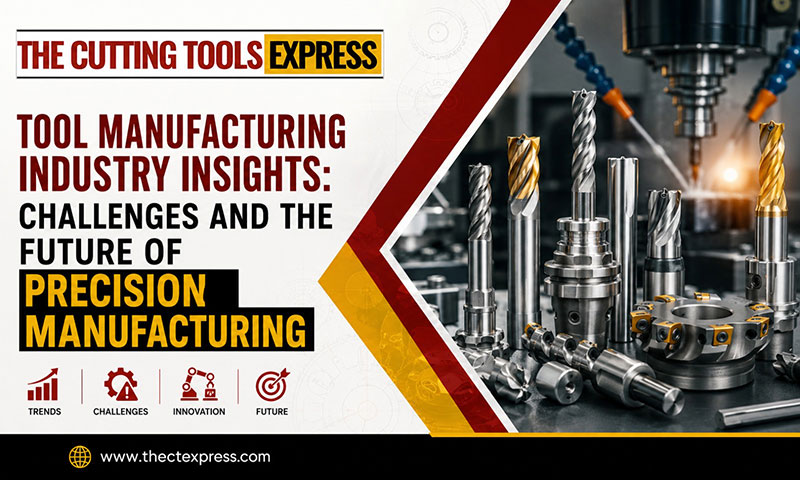
Manufacturing keeps shifting under everyone’s feet — faster production and all at once. Right in the middle of that shift sits the cutting tool sector, quietly doing the work that makes shaping, drilling, milling, and finishing possible across industries as different as automotive and medical devices. The tools themselves might not get much attention, but they’re the reason production lines hit their numbers and parts come out right the first time.
That’s really why Tool Manufacturing Industry Insights matter so much right now. Understanding where the technology and the market are headed helps manufacturers and buyers alike make better calls instead of just reacting to whatever comes next.
What tool manufacturing actually covers
At its core, this industry is about designing and producing the tools used for machining and shaping materials. Nothing fancy in concept — but the execution is what separates a part that meets spec from one that doesn’t.
As customers keep raising the bar on quality. Tool manufacturers have had to keep pace. Investing in tooling that lasts longer and performs better under pressure. That ongoing push is one of the clearest Tool Manufacturing Industry Insights worth paying attention to.
Why the tool itself matters so much
Here’s the thing people sometimes overlook: even a top-tier CNC machine can’t save a job if the tooling is wrong or worn down. The tool is doing the actual cutting — everything else is just support.
Good tooling gets you better accuracy along with longer tool life and lower costs overall. Pick the wrong tool, and you’re looking at wasted material. No matter how good the rest of your setup is.
Where the industry is heading
Smart manufacturing. Machines talk to each other now. Sensors and real-time monitoring are replacing a lot of the guesswork that used to go into catching problems before they became expensive ones. Smart factories generate data that actually gets used — tightening up machining operations instead of just sitting in a report nobody reads.
Better coatings. Cutting tools today often come with specialized coatings that boost hardness, cut down friction, and stretch out tool life. Titanium Nitride, Titanium Aluminum Nitride, Diamond-Like Carbon, Aluminum Titanium Nitride — these aren’t new names, but they keep getting refined, and they’re a big part of why tools hold up under tougher conditions than they used to.
High-speed machining. More shops are pushing toward faster machining without giving up precision, which sounds obvious but took real engineering work to get right. It’s one of the more consistent Tool Manufacturing Industry Insights showing up across sectors — speed and accuracy no longer feel like a trade-off the way they once did.
Automation and robotics. Robots are handling material handling, tool changes, inspection, the repetitive stuff nobody wants to do by hand anymore. Output goes up, manual labor goes down, and workplace safety improves as a side effect.
Who’s actually driving demand
Nearly every corner of manufacturing leans on cutting tools in some way.
Automakers need precision tooling for engine components, transmissions, brakes, structural parts. Aerospace pushes tolerances even tighter — lightweight parts that still have to hold up under real stress. Medical device makers depend on precision tooling for surgical instruments and implants, where there’s simply no room for error. Electronics manufacturers need tools capable of working at a miniature scale. And general engineering — industrial equipment, construction machinery, custom fabrication — keeps the demand steady across the board.
What’s actually making this hard right now
It’s not all smooth progress. Raw material costs for carbide, steel, and specialty alloys keep swinging, which puts real pressure on margins. Finding skilled people to run advanced CNC equipment and design precision tooling has gotten harder, not easier — that shortage isn’t going away soon. Customers keep expecting tighter tolerances and faster turnaround. Which means constant investment just to stay in place. And competition isn’t local anymore. Suppliers everywhere are fighting for the same contracts. This raises the bar on innovation and service.
These pressures are as much a part of the current Tool Manufacturing Industry Insights as any new technology — arguably more so, since they shape what companies can actually afford to do.
Where innovation is taking things
AI is starting to help optimize machining parameters and flag maintenance issues before they turn into downtime. Simulation software lets engineers test a machining strategy before a single part gets cut and time. And additive manufacturing is opening the door to tooling geometries that would’ve been nearly impossible to produce a few years back.
None of this replaces good engineering judgment — it just gives manufacturers better tools (pun intended) to work with as they try to keep costs down and output up.
Picking a tooling partner worth keeping
Not every supplier is equipped the same way, so a few things are worth checking before signing on: how long they’ve been in the industry, the actual quality of what they produce, their manufacturing capabilities, their range of material expertise, whether they can handle custom tooling, how seriously they take quality assurance, the technical support they offer, and whether they actually deliver on time.
The right supplier ends up being more than just someone you order from — they become part of how efficiently your whole operation runs.
What’s next for the industry
Automation, precision engineering, digital manufacturing — none of that is slowing down. Sustainability is also becoming a bigger part of the conversation, with more manufacturers looking at recyclable materials, energy-efficient production, and tools built to last longer rather than get replaced constantly.
Companies that keep up with Tool Manufacturing Industry Insights are simply in a better position — better equipped to adapt as technology shifts, keep production efficient, and hold their ground in a market that isn’t getting any less competitive.
Final thoughts
The cutting tool industry keeps moving through innovation, automation, and precision engineering, and there’s no sign of that slowing down. Businesses that pay attention to where things are headed tend to make smarter calls — better productivity, lower costs, and quality that holds up.
Whether you’re upgrading machining operations, investing in better tooling, or just looking for a supplier you can actually count on, the right partnership makes a real difference. The Cutting Tools Express works to support manufacturers with tooling solutions built for what modern industry actually demands.
FAQs
- Why are cutting tools so important in manufacturing?
They directly shape machining accuracy & the overall quality of the finished part. - Which industries depend on cutting tools most?
Automotive and medical, along with electronics and general engineering all rely heavily on them. - What are coated cutting tools?
Tools with protective coatings that improve durability, cut down wear, and boost machining performance. - How does automation help tool manufacturing?
It boosts efficiency and keeps production quality more consistent. - How do businesses stay current with tool manufacturing trends?
By following industry reports and working with tooling partners who actually have experience.



1 Comment
Pingback: Tool Manufacturing Industry Insights | CT Express