


As Indian manufacturing advances towards greater precision, productivity and global competitiveness, optimising machining processes is essential for cost control and operational efficiency. ISCAR India supports manufacturers through advanced cutting tools, application engineering and integrated machining solutions.
In this exclusive interview, Rahul Patil, President and CEO, ISCAR India, shares how cutting-edge technologies and IMC Group expertise help manufacturers reduce cost per component, improve machine utilisation ensure process stability and enhance global competitiveness.
Q. Indian Manufacturers Face Pressure To Reduce Machining Costs While Maintaining Quality And Productivity. How Is Iscar Leveraging Advanced Cutting Tool Technologies And Application Engineering To Help Customers Overcome These Challenges?
Across Indian shop floors, a persistent misconception is that reducing tooling acquisition price lowers production costs. Cutting tools represent only 3% to 4% of total manufacturing cost per component. However, the right tool and cutting strategy directly control machine output, spindle utilisation and scrap rates—factors governing the remaining 96% of production expenses.
At ISCAR, our focus is driving down Cost Per Component (CPC) through LOGIQ and NEOLOGIQ product campaigns, backed by hands-on application engineering. We do not simply supply carbide; we audit the customer’s entire machining process. Multi-edge insert concepts like LOGIQ-4-TURN and LOGIQ-8-TANG, alongside intelligent toolpaths, help manufacturers run at higher cutting speeds and feeds while extending tool life. This reduces cycle time and cost per edge, allowing customers to maintain micron-level quality while protecting operating margins.
Q. Many Indian Machine Shops Struggle With Inconsistent Raw Material Quality, Unpredictable Tool Life And Varying Machining Conditions. How Do Iscar’s Grades, Coatings And Cutting Geometries Ensure Process Stability And Consistent Performance?
Machining conditions in India are demanding. Forgings and castings can exhibit variable hardness, heavy scale and inconsistent machining allowances, while older or less rigid machines introduce vibration. These fluctuations can cause micro-chipping, tool breakage and unplanned downtime.
ISCAR addresses variability through metallurgical innovation and geometry engineering. Our proprietary SUMO TEC post-coating treatment smooths the insert surface microscopically, reducing friction, preventing built-up edge and dissipating heat from the cutting zone. We pair it with tough, sub-micron carbide substrates and advanced PVD and CVD coatings that withstand thermal and mechanical shocks. Positive-rake and helical geometries, including HELI2000 and DOVE IQ MILL, provide soft cutting action, reduce cutting forces and absorb impact loads during interrupted cuts. Even when raw material hardness fluctuates, our grades provide predictable, gradual wear rather than catastrophic failure, securing process stability.
Q. As Part Of The IMC Group, Comprising 15 Companies With Complementary Metalworking Technologies, How Does This Advantage Help Iscar Address Complex Machining Challenges Across Automotive, Aerospace, Die & Mould And Other Sectors?
The International Metalworking Companies (IMC) Group gives ISCAR broad technological reach. India’s metalworking requirements are diversifying—from changing automotive powertrains to growing aerospace, defence, medical and die & mould sectors—so a standard tool catalogue cannot solve every specialised challenge.
Through the IMC network, ISCAR draws on global centres of excellence in metallurgy, ceramic and CBN substrates, micro-machining and heavy-duty engineering. For aerospace customers machining heat-resistant superalloys (HRSAs), such as Inconel or titanium, we combine high-pressure jet-coolant tooling with specialised ceramic and whisker-reinforced grades. In die & mould and heavy power-generation sectors, we integrate ultra-rigid milling concepts and specialised deep-hole drilling technologies.
Q. Many Indian SMEs Face A Shortage Of Skilled Machinists And Limited Expertise In Optimising Cutting Parameters.
How Does Iscar Combine Application Engineering, Technical Training And Imc Resources To Improve Performance And Develop Reliable Processes?
India’s SME sector is the backbone of our manufacturing economy, yet many shop owners face high operator turnover and conservative parameter selection based on guesswork. ISCAR bridges this skill gap through digital tools and localised technical education.
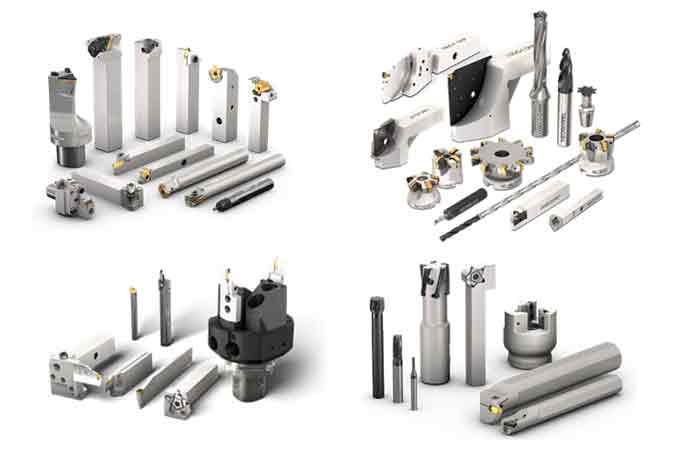
Our digital ecosystem—including the ISCAR World app, NeoITA (ISCAR Tool Advisor) and Machining Power Calculators—functions as a 24/7 virtual application engineer. Operators or programmers
can enter machine power, material grade and feature geometry to receive optimised cutting parameters and tool assembly recommendations. Our field application engineers also work closely with SME machinists on on-site trials, standard operating sheets and troubleshooting chatter or chip evacuation. Regular technical seminars and hands-on training across industrial hubs help SMEs move from trial-and-error machining to repeatable, data-driven processes.
Q. How Can Iscar, Backed By The IMC Group’s Comprehensive Capabilities, Help Indian Manufacturers Move From Individual Tool Selection To Integrated Solutions That Reduce Cost Per Component, Improve Productivity And Strengthen Global Competitiveness?
As global supply chains look to India as a premier manufacturing hub, suppliers can no longer compete on labour arbitrage alone; they must deliver process efficiency, zero-defect quality and reliable delivery. This requires moving from transactional tool buying to holistic, turnkey engineering partnerships.
ISCAR offers comprehensive project engineering right from the component drawing. For a new global contract, turnkey teams design the machining strategy: selecting fixture concepts, combining operations into custom combination tools, providing 3D digital twin tool assemblies for collision-free CAM simulation, and integrating MATRIX automated tool dispensing systems to eliminate stock-outs and track tool consumption per part. By harmonising cutting tools, toolholders and digital inventory management under one roof, ISCAR and the IMC Group help manufacturers achieve world-class OEE (Overall Equipment Effectiveness) and compete confidently on the global stage.
Q. With Rising Competition And Pressure To Deliver Faster, How Can Iscar Help Manufacturers Improve Machine Utilisation And Reduce Cycle Times Without Significant Machinery Investment?
Expanding capacity does not always require new CNC machines; the fastest route is unlocking hidden spindle hours on existing equipment. ISCAR’s “No Setup Time” philosophy maximises utilisation by virtually eliminating non-cutting downtime.
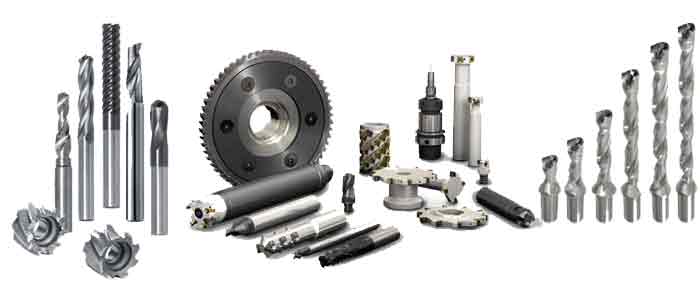
CHAMDRILL and SUMOCHAM exchangeable-head drilling systems allow operators to replace a worn carbide drill tip in seconds inside the machine, with zero pre-setting or re-zeroing. MULTI-MASTER exchangeable solid-carbide heads bring quick-change versatility to milling. High Feed Milling (FF) solutions use shallow axial depths of cut at exceptionally high feed rates, directing cutting forces axially towards the spindle’s most rigid axis. High-pressure coolant (HPC) toolholders help evacuate chips and cool the shear zone. These solutions can boost Metal Removal Rates (MRR) by 30% to 50% on existing machinery.

