The global cutting tool industry is undergoing a significant shift as rising tungsten prices, raw-material scarcity, and increasing demand from advanced manufacturing sectors reshape cost structures worldwide. Throughout 2025, carbide rod and cutting tool manufacturers announced multiple price increases, and their cumulative impact is expected to become more pronounced in 2026.
As these pressures intensify, manufacturers are being challenged to do more than simply absorb higher costs or pass them downstream. The situation is forcing the industry to rethink how cutting tools are designed, deployed, and replaced—placing greater emphasis on efficiency, sustainability, and long-term value rather than short-term price reactions.
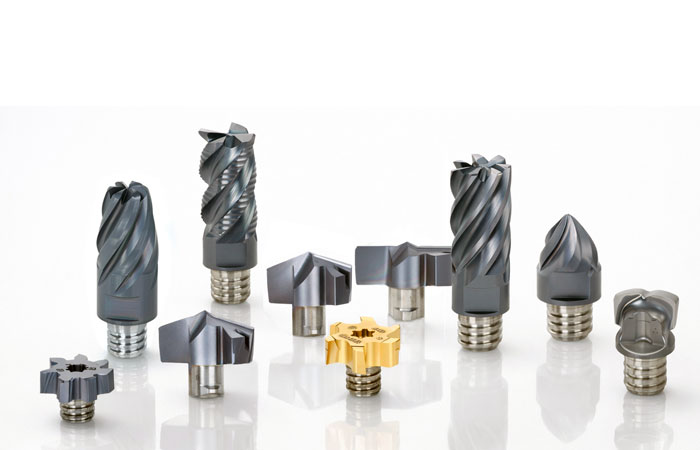
At Tungaloy, this challenge is being met at the architectural level of the tool itself. Instead of relying solely on conventional solid carbide designs, the company is promoting exchangeable-head solid carbide systems that significantly reduce material consumption while maintaining, and often improving, machining performance.
Material Efficiency, Sustainability, and Operational Flexibility
Traditional solid carbide tools must be completely replaced once they wear out, resulting in high carbide consumption and substantial material waste. In contrast, exchangeable-head systems are designed so that only the worn cutting head is replaced, while the tool body remains in service. This approach dramatically reduces the amount of carbide required per tool life cycle, helping manufacturers limit waste and lower their exposure to volatile raw-material pricing.
This material-efficient philosophy is embedded in Tungaloy’s DrillMeister drilling system and TungMeister milling system. Both platforms are engineered to deliver performance comparable to solid carbide tools, while using significantly less carbide over time. As access to critical raw materials becomes more constrained, such efficiency is no longer optional—it is increasingly essential.
Beyond sustainability, the modular nature of exchangeable-head tools offers exceptional versatility. TungMeister supports a wide range of milling heads designed for high-feed milling, face milling, shoulder machining, slotting, and chamfering. Similarly, DrillMeister offers multiple drilling head options optimized for different hole-making requirements. This flexibility allows manufacturers to respond quickly to changing production demands while keeping tooling inventories lean and manageable.
Supporting High-Precision Manufacturing Environments
Advanced manufacturing sectors—including automotive, aerospace, energy, and precision engineering—demand tight tolerances, consistent surface finishes, and stable, repeatable processes. These requirements often come with high tool consumption rates, making tooling cost stability a critical factor.
By combining modular versatility with reduced material usage, exchangeable-head systems help manufacturers strike a balance between productivity, cost control, and long-term resource efficiency. The result is greater process stability and improved predictability in environments where both precision and throughput are non-negotiable.

A Long-Term Perspective on Rising Costs
Tungaloy’s approach reflects a broader philosophy: when material costs continue to rise, the industry must look beyond temporary fixes. Sustainable solutions must be designed into the tool itself. By minimizing waste, extending tool body life, and improving application flexibility, manufacturers can maintain competitiveness even as external conditions fluctuate.
In an era of rising costs and limited resources, smarter tool architecture offers a path forward—one that supports productivity today while safeguarding stability for the future. And as the industry adapts, it becomes clear that success lies not in short-term reactions, but in long-term thinking—without, quite literally, losing one’s head.