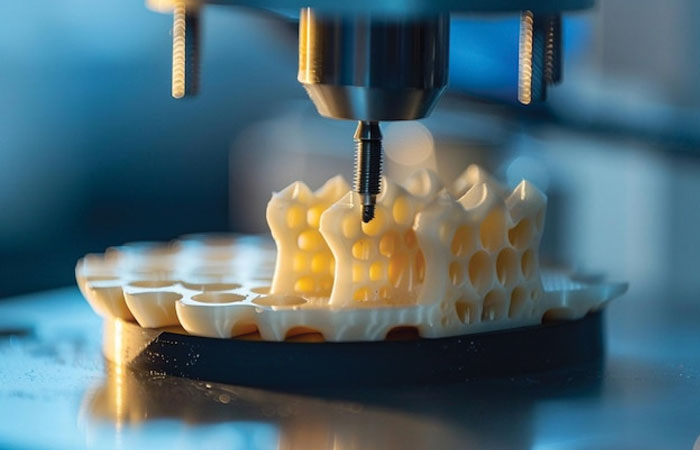
In the medical device sector, orthopedic implants—such as knee and hip replacements—are some of the most demanding parts. These implants need to blend in perfectly with the human body in addition to being able to tolerate high mechanical stress. To satisfy these requirements and guarantee that every implant is made to rigorous standards, precision machining is essential. This article delves further into the machining procedures that go into making orthopedic implants, emphasizing the surface finishes, tolerances, and quality control procedures that are necessary for a successful outcome.
The Importance of Tolerances in Orthopedic Implants
Orthopedic implants must be manufactured with extreme precision, as even the smallest deviations can lead to implant failure or complications post-surgery. Tolerances—the allowable variations in a part’s dimensions—are therefore critical in the production process. For knee and hip replacements, tolerances are typically in the range of micrometers. This level of precision ensures that the implants fit perfectly within the patient’s anatomy, providing stability and functionality.
Achieving these tight tolerances requires advanced machining techniques and state-of-the-art equipment. CNC (Computer Numerical Control) machines are commonly used for this purpose, as they can consistently produce parts with high accuracy. Multi-axis CNC machining is particularly beneficial in creating the complex geometries required for orthopedic implants, allowing for the precise shaping of components such as femoral heads, acetabular cups, and tibial trays.
Surface Finishes: Enhancing Biocompatibility and Longevity
Surface finish is another critical aspect of orthopedic implant manufacturing. The surface of the implant must be smooth enough to minimize wear and reduce friction, yet it also needs to have certain features to promote bone integration. For example, a polished finish may be used on bearing surfaces to reduce wear, while a roughened or porous surface may be applied to areas intended for bone growth, enhancing the implant’s stability within the body.
Achieving the desired surface finish requires careful control of the machining process. Techniques such as polishing, grinding, and honing are often used to achieve the necessary smoothness and texture. In some cases, specialized coatings, such as hydroxyapatite or titanium plasma spray, may be applied to further enhance biocompatibility and encourage bone growth. These coatings require precise application and careful quality control to ensure uniform coverage and adhesion.
Quality Control: Ensuring Reliability and Safety
Given the critical role of orthopedic implants in patient health, rigorous quality control measures are essential throughout the manufacturing process. Quality control begins with the selection of materials, which must meet strict biocompatibility standards. Titanium and cobalt-chromium alloys are commonly used for their strength, durability, and compatibility with the human body.
During the machining process, in-line inspections are conducted to verify that dimensions and tolerances are within the specified range. Advanced metrology tools, such as coordinate measuring machines (CMMs) and laser scanners, are used to measure the components with high precision. These tools help detect any deviations that could compromise the performance of the implant.
Post-machining, implants undergo additional inspections to ensure they meet the required surface finish specifications. Non-destructive testing methods, such as ultrasonic testing and X-ray inspection, may also be employed to detect internal defects or inconsistencies that are not visible on the surface. Finally, each implant is subject to a thorough final inspection before it is approved for use, ensuring that only the highest quality products reach the operating room.
The foundation of orthopedic implant production is precision machining, which makes it possible to produce implants that satisfy the exacting standards of the medical industry. Implants that are safe, dependable, and functional for patients can be produced by manufacturers by carefully managing tolerances, surface treatments, and quality control procedures. Precision machining will always be essential to the manufacturing of orthopedic implants as technology develops, improving patient outcomes and quality of life for people all over the world.
image courtesy : Design by Freepik