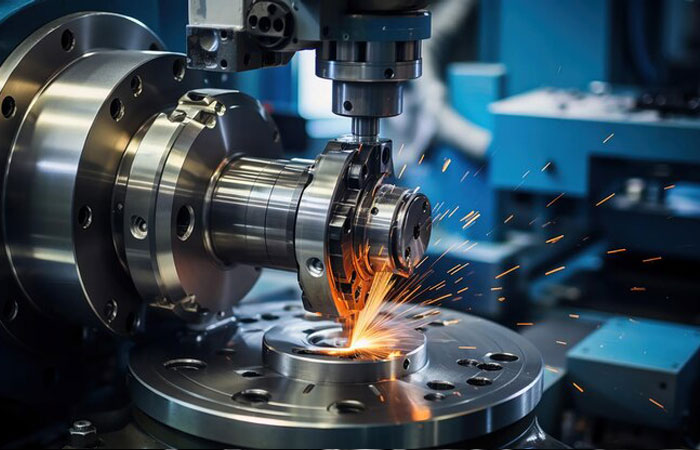
Die-mould machining stands at the forefront of manufacturing, playing a pivotal role in industries ranging from automotive to consumer goods. As technology continues to advance, the landscape of die-mould machining is undergoing rapid transformation. This story delves into the future trends that are shaping the industry, focusing on advancements in materials, technologies, automation, sustainability initiatives, and the impact of global manufacturing trends.
Advancements in Materials
High-Performance Tool Steels: High-performance tool steels are evolving with enhanced properties like superior wear resistance, toughness, and thermal conductivity. These advancements extend tool life significantly, enabling better performance in high-speed machining operations. By withstanding extreme conditions and maintaining dimensional stability, these steels cater to demanding manufacturing environments, ensuring reliable and efficient production processes.
Advanced Ceramics and Carbides: Advanced ceramics and carbides are prized for their exceptional hardness and heat resistance, making them indispensable in machining scenarios prone to high temperatures and abrasive wear. These materials offer superior performance in cutting tools, molds, and wear-resistant components, enhancing durability and precision in manufacturing processes. Their ability to withstand harsh conditions ensures longevity and reliability, driving advancements in efficiency and quality across various industrial sectors.
Development of Composite Materials: Composite materials are being utilized in die and mould construction due to their lightweight nature, high strength-to-weight ratio, and corrosion resistance. These materials are particularly beneficial in aerospace and automotive industries.
Nanostructured Materials: Nanostructured materials exhibit exceptional properties like enhanced hardness, strength, and wear resistance due to their nano-scale grain size. Ongoing research explores their potential in precision machining for die and mould manufacturing, aiming to improve tool life, reduce wear, and enhance machining accuracy. These materials hold promise for creating intricate geometries with high surface finish, contributing to advancements in manufacturing efficiency and product quality. Their application in critical components underscores their role in shaping future innovations in the die and mould industry.
Technological Innovations
Additive Manufacturing (3D Printing): Additive manufacturing, commonly known as 3D printing, represents a revolutionary leap in die and mould production. This technology enables manufacturers to create intricate geometries and complex designs that traditional machining methods struggle to achieve. By layering materials such as metal powders and polymers, additive manufacturing facilitates rapid prototyping and customization of tooling with unparalleled precision.
One of the key advantages of additive manufacturing in die and mould production is its ability to minimize material waste. Unlike subtractive manufacturing processes where excess material is cut away, 3D printing builds components layer by layer, using only the necessary amount of material. This efficiency not only reduces costs but also supports sustainable manufacturing practices.
Moreover, additive manufacturing allows for the integration of features like conformal cooling channels within moulds, enhancing cooling efficiency and reducing cycle times. These capabilities make 3D printing indispensable in accelerating product development cycles and meeting the evolving demands of modern manufacturing industries. As this technology continues to advance, its impact on innovation and productivity in die and mould machining is set to expand further, driving new possibilities and efficiencies across the industry.
High-Speed Machining (HSM): High-Speed Machining (HSM) techniques are advancing to achieve faster cutting speeds and shorter cycle times in die-mould machining. Innovations in spindle technology, toolpath optimization software, and advanced cooling systems are enhancing the efficiency and precision of HSM processes. These developments enable manufacturers to produce complex moulds and dies with greater accuracy and surface finish, meeting the demand for high productivity and reduced lead times in modern manufacturing environments.
Multi-Axis Machining: Multi-axis machining centers revolutionize die and mould manufacturing by enabling simultaneous tool movement along multiple axes. This capability enhances the production of complex geometries and reduces setup times significantly. These machines are essential for creating intricate mould cavities and cores with utmost precision, meeting the stringent demands of modern manufacturing. By leveraging multi-axis machining, manufacturers can achieve higher efficiency, improved surface finish, and enhanced productivity in the fabrication of precision components for various industrial applications.
Artificial Intelligence (AI) and Machine Learning: Artificial Intelligence (AI) and Machine Learning are transforming die and mould machining by enhancing CNC machines and CAD/CAM software. AI algorithms optimize tool paths, predict tool wear, and streamline machining operations for improved efficiency. Machine learning models analyze extensive datasets to refine processes continuously, adapting parameters in real-time to maximize precision and productivity. These advancements empower manufacturers to achieve higher accuracy, reduce production costs, and accelerate time-to-market for complex die and mould components. AI-driven innovations are reshaping the industry, enabling smarter, more adaptive manufacturing practices that meet the evolving demands of global markets
Automation and Robotics
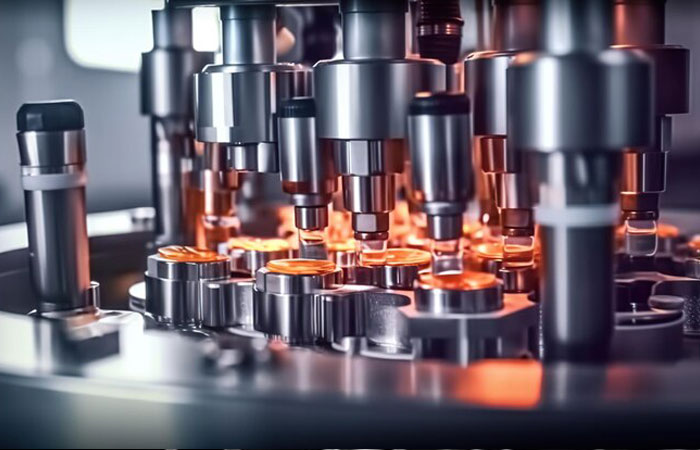
Robotic Machining Cells: Robotic arms equipped with advanced end-effectors are automating repetitive tasks such as tool loading, part handling, and finishing operations in die-mould machining. This improves productivity, reduces lead times, and enhances workplace safety.
Collaborative Robots (Cobots): Cobots work alongside human operators to perform intricate tasks that require precision and dexterity. They are equipped with sensors and vision systems to ensure safe interaction in manufacturing environments.
Digital Twin Technology: Digital twins create virtual replicas of physical die and mould systems, allowing manufacturers to simulate and optimize machining processes before physical production begins. This reduces trial-and-error and enhances process reliability.
Sustainability Initiatives
Green Manufacturing Practices: Manufacturers are adopting sustainable practices such as energy-efficient machining processes, recycling of coolant fluids, and reducing material waste through additive manufacturing. These initiatives aim to minimize environmental impact and comply with regulatory standards.
Biodegradable and Recyclable Materials: There is a growing focus on using biodegradable plastics and recyclable materials in die and mould manufacturing. These materials reduce dependency on fossil fuels and promote circular economy principles within the industry.
Energy-Efficient Technologies: Advancements in machining technologies, such as regenerative braking systems and energy recovery solutions, are optimizing energy consumption during machining operations. This lowers carbon emissions and operational costs for manufacturers.
Impact of Global Manufacturing Trends
Reshoring and Regionalization: The trend towards reshoring and regional manufacturing hubs is influencing die-mould machining. Companies are prioritizing local production to reduce supply chain risks, improve logistics, and respond faster to market demands.
Digitalization and Smart Factories: Digital transformation initiatives are creating smart factories equipped with interconnected machines, IoT sensors, and real-time data analytics. This seamless integration enhances production agility, quality control, and overall operational efficiency.
Global Supply Chain Optimization: Die and mould manufacturers are leveraging digital platforms and supply chain analytics to optimize procurement, inventory management, and supplier collaboration on a global scale. This ensures timely delivery of raw materials and components, minimizing production disruptions.
The future of die-mould machining is defined by innovation, sustainability, and adaptation to global manufacturing trends. Advancements in materials, technologies, automation, sustainability initiatives, and the impact of global manufacturing trends are driving industry evolution. Manufacturers must embrace these trends to stay competitive, improve productivity, and meet the growing demand for high-quality, customized die and mould solutions in diverse industrial sectors. By aligning with these future trends, die and mould machining will continue to play a crucial role in shaping the manufacturing landscape, driving economic growth, and fostering technological progress worldwide.