India’s manufacturing landscape is moving rapidly toward higher precision, greater productivity and advanced materials. Aerospace, defence, automotive, electronics, medical, die & mould and precision engineering manufacturers increasingly require tooling solutions that deliver shorter cycle times, longer tool life, tighter tolerances and greater process reliability.
For GTW, the cutting tool is no longer simply a consumable—it is a critical productivity enabler. The company has built its capabilities around advanced CNC tool grinding, digital manufacturing, Industry 4.0, R&D, metrology, quality assurance and application engineering. In this exclusive interview, Tosher Hormusjee, Managing Director, Gusti Tool Works LLP, discusses GTW’s journey, technological advancements, customized tooling solutions, difficult-to-machine materials, digital transformation and his vision for the Indian cutting tool industry.
GTW has built a strong reputation in precision carbide cutting tools. Could you share the company’s journey, core philosophy, and how it has evolved into a productivity-driven machining solutions partner?
GTW began with the objective of addressing a significant gap in the Indian manufacturing ecosystem—the dependence on imported high-performance cutting tools for critical applications in aerospace, energy, automotive and precision engineering.
Over the years, we have invested continuously in advanced CNC tool grinding, digital manufacturing and Industry 4.0, R&D, metrology, quality assurance, skilled manpower and process engineering. This has enabled us to develop thousands of specialized tool designs and manufacture complex cutting tools with micron-level precision.
Our philosophy is simple: “A cutting tool is not merely a consumable—it is a productivity enabler.”
Its real value lies in reducing cycle times, increasing profitability, improving component quality, increasing machine output, enhancing process reliability and improving OEE. This philosophy has helped GTW move beyond transactional tool supply and become a strategic manufacturing partner.
How are the evolving requirements of automotive, aerospace, defence, electronics, medical, die & mould and precision engineering industries shaping GTW’s tooling development and application engineering strategies?
Across these sectors, customers are demanding higher productivity, fewer tools, shorter cycle times and greater machine utilization. At the same time, materials such as titanium, superalloys, hardened steels and advanced aluminium alloys require new tooling technologies, while precision requirements increasingly enter the micron range.
Sustainability and cost reduction are also becoming important. Customers expect longer tool life, reconditioning support and lower total cost of ownership. Automation and unmanned manufacturing require consistent tool performance with minimal operator intervention.
GTW has therefore evolved its application engineering model to become consultative, collaborative, data-driven, productivity-oriented and lifecycle-based. We understand the entire manufacturing process, work with customers during process development and provide continued application and regrinding support, focusing on measurable improvements in cycle time, tool life and total cost of ownership.
What major technological advancements, manufacturing upgrades and process innovations has GTW introduced over the last two years?
Our objective is to combine precision engineering, advanced manufacturing technologies and application expertise to help customers manufacture more efficiently, competitively and sustainably.
We have strengthened our digital manufacturing and Industry 4.0 capabilities through paperless manufacturing, ERP-driven production planning and traceability, digital documentation, process monitoring, real-time production tracking and data-driven decision-making. Every tool can be traced to its raw material, manufacturing process, inspection records and reconditioning history.
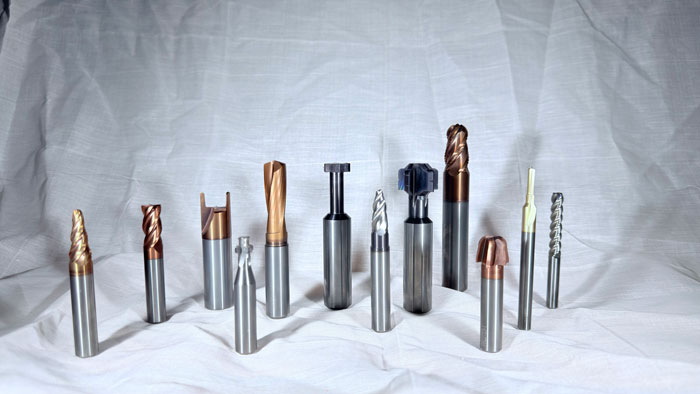
We have also improved grinding process controls, wheel management, machine calibration, thermal stability and coolant filtration. Our tooling portfolio has expanded to include variable helix and variable pitch end mills, high-performance drills, micro tools, complex profile cutters, form tools, multifunctional tools, advanced reaming solutions and specialized aerospace and energy tools.
We have strengthened R&D, simulation, application engineering, product validation and customer machining optimization. Our expertise in titanium, Inconel, superalloys, hardened steels, high-strength stainless steels and advanced aluminium alloys has also grown.
Finally, reconditioning, resharpening, tool lifecycle management and quality systems have been enhanced to extend tool life, reduce total cost of ownership and support sustainability.
How is GTW helping manufacturers overcome productivity and cost-per-component challenges when machining difficult materials such as titanium, Inconel and hardened steels?
As Indian manufacturing moves toward higher-value production and global competitiveness, the cutting tool has become a strategic productivity enabler.
We do not simply manufacture cutting tools; we engineer solutions that enable our customers to machine smarter, faster and more competitively.
Manufacturers face shorter development cycles, higher quality expectations, cost pressures, labour shortages, increasing automation, demand for unmanned and lights-out machining, advanced materials and global competition.
The cutting tool represents only a small part of total manufacturing cost. The larger impact comes from cycle time, machine utilization, tool change frequency, scrap, process stability and component quality.
Therefore, GTW focuses on optimizing the entire machining process rather than simply supplying a tool. Our customized tooling solutions are developed around each customer’s specific process and manufacturing objectives.
What opportunities are emerging for Indian cutting tool manufacturers with the growth of aerospace, defence, electronics and the Government’s push for import substitution?
India is entering a transformational phase. Aerospace expansion, defence indigenization, electronics manufacturing, semiconductor investments and the strong push toward Make in India and Atmanirbhar Bharat are creating significant opportunities for the Indian cutting tool industry.
India has the opportunity to evolve from being largely a consumer of advanced manufacturing technologies into a global manufacturing and engineering hub. Cutting tools form the foundation of this transformation because precision components cannot be manufactured without precision tooling.
At GTW, we see this as a defining moment. Our objective is to become a globally respected Indian precision tooling company that enables self-reliance, supports advanced manufacturing and partners with customers in aerospace, defence, electronics and high-technology industries.
The future of Indian manufacturing will be built on precision engineering, and precision engineering will be built on advanced cutting tools. GTW aims to deliver innovation, productivity and world-class machining solutions engineered in India for the world.
How are AI, automation, digital manufacturing and unmanned machining influencing GTW’s operations and customer engagement?
AI, automation, digital manufacturing, Industry 4.0 and unmanned machining are fundamentally changing how factories operate. We view these trends as opportunities to build a smarter, more agile and technology-driven organization.
GTW is advancing toward a digitally integrated manufacturing environment through ERP-driven production management, paperless systems, digital process documentation, real-time monitoring and end-to-end traceability. Digitalization improves process consistency, reduces human errors, increases production visibility, accelerates decision-making and improves operational efficiency.
Industry 4.0 is not merely about automation—it is about creating connected and intelligent manufacturing systems.
Customers increasingly expect support in process optimization, productivity improvement, machining strategy, digital manufacturing, cost-per-component reduction and automation readiness.
GTW is therefore moving from tool supplier to technology partner, combining:
Precision engineering + digital manufacturing + automation + application expertise.
The future of manufacturing will be autonomous, connected and data-driven, and GTW is committed to building the tooling technologies and engineering capabilities required for this transformation.
What is your vision for GTW over the next five years, and how can the Indian cutting tools industry contribute to India’s ambition of becoming a global manufacturing powerhouse?
I firmly believe that the coming decade can be India’s manufacturing decade. If India is to become a global manufacturing powerhouse, it must build world-class capabilities in precision engineering and cutting tools.
At GTW, our vision is to “Engineer precision, enable productivity, and build technologies that help transform India into a globally competitive manufacturing nation.”
Every aircraft engine, defence platform, semiconductor component, electric vehicle and precision machine begins with a fundamental requirement—a cutting tool capable of manufacturing it with precision and reliability.
A robust domestic tooling industry provides manufacturing self-reliance, faster product development, reduced dependence on imports, supply chain security, technology development and increased manufacturing competitiveness.
Over the next five years, GTW aspires to become a benchmark Indian precision tooling company known for engineering excellence, innovation, customer partnership and global competitiveness.
Our aspiration is not simply to grow in size, but to grow in technological capability and create long-term value for customers and the Indian manufacturing ecosystem.